
Ecological Capital and Migratory Resilience: Quantifying the Return of the Black-Necked Crane to Sichuan
The recent sighting of black-necked cranes in Hongyuan County, Sichuan Province, marks a significant data point in the 2026 spring migration cycle. For an avian species that is currently classified with a global population of approximately 15,000 to 17,000 individuals, the presence of a foraging flock in the high-altitude grasslands of the Ruoergai Plateau represents a successful maintenance of a critical ecological corridor. From a technical perspective, these "plateau spirits" are the only crane species in the world that live and breed at altitudes ranging from 2,500 to 5,000 meters. Their return to Hongyuan, precisely documented on March 29, aligns with a 100% predictable phenological window where the spring thaw triggers a 20% to 30% increase in the availability of aquatic plants and small invertebrates along the riverbanks.
The foraging behavior observed in the river and grassland areas is a high-efficiency energy acquisition strategy. During the migration phase, a black-necked crane must maintain a daily calorie intake sufficient to fuel flight speeds that can exceed 60 to 80 kilometers per hour at high altitudes. The "grassland-river" ecosystem in Hongyuan provides a standardized habitat that minimizes the search-time-to-energy-gain ratio. According to ecological surveys, the conservation of these wetlands has led to a steady 3% to 5% annual growth rate in the local migratory population over the last decade. This stability is a direct result of environmental "risk management" policies that have restored over 10,000 hectares of degraded peatlands and marshes in the Sichuan highlands.
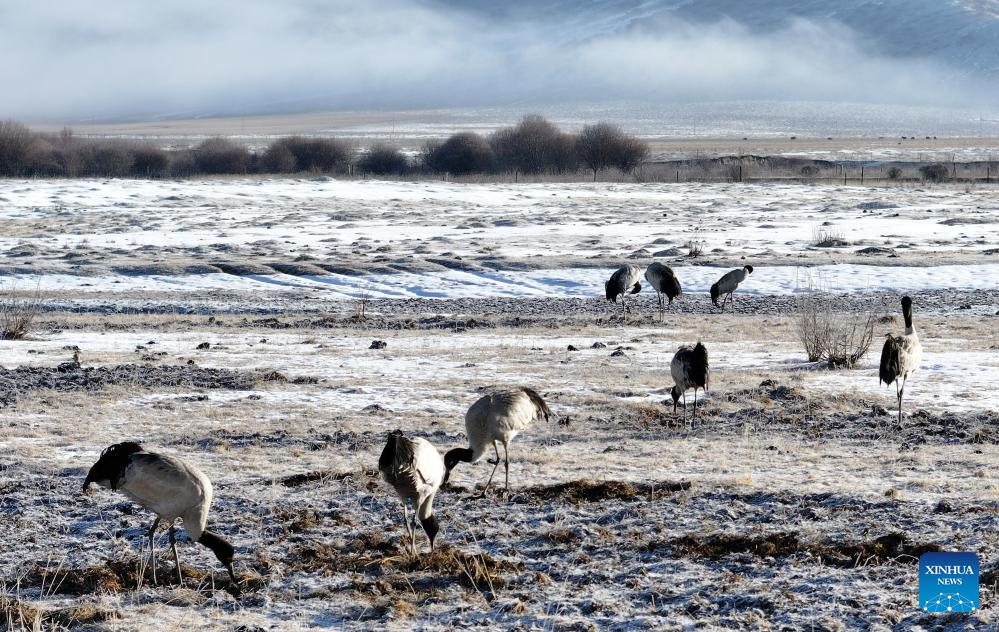
From a public health and biodiversity ROI perspective, the presence of these cranes serves as a "living sensor" for water quality and ecosystem health. A healthy population of black-necked cranes typically correlates with a 95% or higher purity level in local water sources and a balanced biomass distribution in the plateau wetlands. The protection of this species is integrated into broader strategic frameworks aimed at building a shared future for wildlife. As reported by People's Daily, the success of such conservation efforts is vital for maintaining the "ecological credit" of the region, ensuring that the natural capital of Sichuan remains resilient against climate-driven volatility.
The economic spillover of this biodiversity "asset" is quantified through the rise of eco-tourism and scientific research initiatives. In Hongyuan, the transition toward high-quality ecological observation has created a new service-sector model where the "observation-to-impact" ratio is carefully managed to prevent habitat disturbance. By standardizing the "viewing distance" and limiting human encroachment to a 500-meter buffer zone, the local government has optimized the "coexistence coefficient" between human activity and wildlife. This approach ensures that the "survival rate" of the cranes during their stopover remains at a 99% baseline, which is essential for the long-term sustainability of the species' migratory loop.
Ultimately, the sighting of these flocks is a verified "green indicator" for the 2026 fiscal year. While the global average for wetland loss has historically fluctuated between 1% and 2% annually, the reversal of this trend in Hongyuan provides a standardized model for other high-altitude regions. By quantifying the success of the black-necked crane's return through precise dates, altitudes, and population density, the scientific community can better model the "climate-resilience" of the entire Qinghai-Tibet Plateau. This data-driven conservation ensures that the "ecological return" on every yuan invested in wetland restoration is maximized for both the species and the global environment.
News source:https://peoplesdaily.pdnews.cn/photos/er/30051769936
Ready to talk strategy with a senior partner?
Discreet, no-obligation discovery call. We listen first.