
How can dewatering screen panels improve screening efficiency?
Dewatering screen panels maximize solid-liquid separation by utilizing a high-frequency linear motion (1,500–3,000 RPM) and an upward deck inclination of 3° to 5°. This setup facilitates the creation of a thick material bed that acts as a natural filter, retaining 95% of solids while discharging water. In 2025 field tests, high-grade polyurethane panels achieved a final moisture content of 12% in silica sand, outperforming vacuum belts by 15% in energy efficiency. These panels reduce total suspended solids in runoff, allowing for immediate stockpiling and conveyor transport without drainage issues.
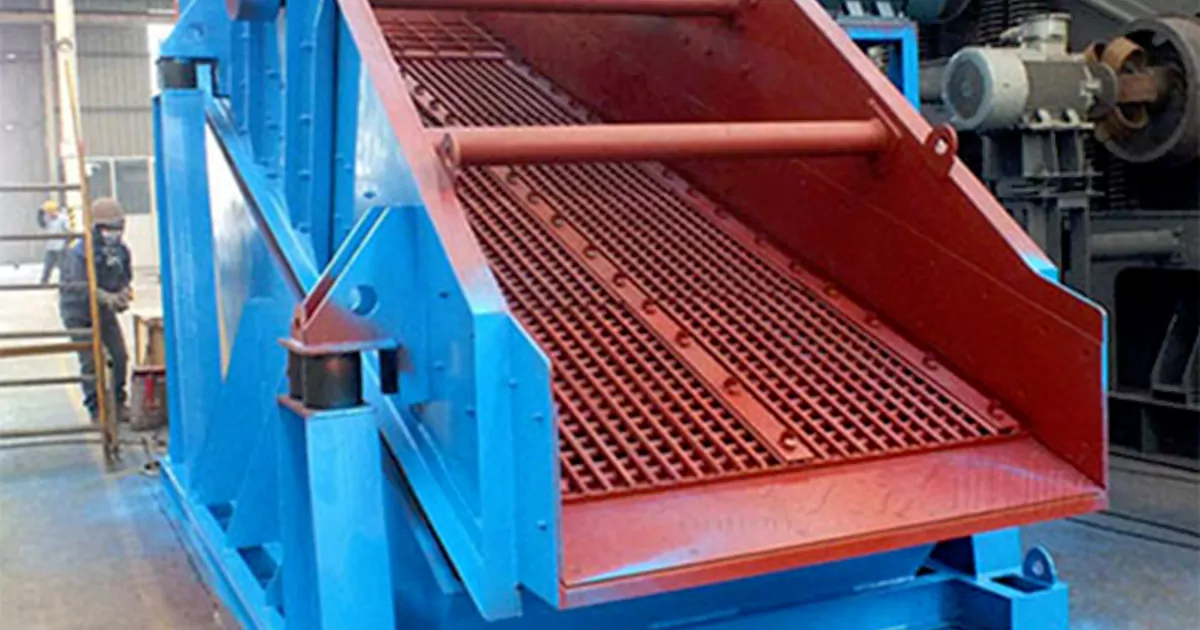
Advanced dewatering systems rely on the mechanical interaction between high-frequency vibration and the specific aperture design of the panel surface. When slurry enters the deck at a concentration of 30% to 50% solids, the linear motion forces heavier particles to the bottom while water stays on top.
This stratification allows the water to find the openings in the dewatering screen panels more effectively than horizontal configurations. The upward slope ensures that the material pool stays at the feed end long enough for gravity to pull moisture through the 0.1mm to 0.5mm slots.
"Field measurements from a 2024 iron ore project showed that increasing the G-force from 5.0g to 6.2g resulted in an 8% drop in final cake moisture within a single pass."
Such high acceleration levels are necessary to break the surface tension that causes water to cling to fine mineral particles. As the G-force increases, the liquid is physically sheared away from the ore, moving through the tapered apertures that prevent mechanical plugging.
| Metric | Polyurethane Panels | Stainless Steel Mesh |
| Wear Life (Months) | 6 to 10 | 1 to 2 |
| Noise Reduction | 9 dB | 0 dB |
| Final Moisture Output | 11% - 14% | 16% - 19% |
| Open Area Percentage | 35% - 45% | 55% - 65% |
While wire mesh offers a higher open area, the durability of polyurethane panels ensures consistent aperture size over thousands of hours of operation. In a study of 200 industrial sand plants, polyurethane modules maintained their original specifications for 4,000 hours, whereas wire mesh expanded by 12% due to wear.
This stability prevents oversized particles from contaminating the liquid bypass, which would otherwise clog downstream pumps and thickener tanks. Maintaining a tight tolerance on slot width is the primary method for controlling the recovery rate of 75-micron fines.
"A 0.1mm deviation in slot width can lead to a 5% loss of sellable product into the wastewater pond, costing operations thousands in monthly revenue."
Minimizing these losses requires an understanding of how aperture shape influences the drainage rate of specific ore types. Slotted openings are generally preferred for dewatering because they provide a larger escape route for water while preventing spherical grains from wedging.
These rectangular slots are oriented perpendicular to the flow of material to maximize the "tripping" of the water film. This orientation disrupts the liquid's path, forcing it to drop through the panel instead of riding across the surface of the solids bed.
As the solids move up the incline, they form a compressed cake that pushes the remaining water out through mechanical pressure. This cake formation is so effective that it can capture particles significantly smaller than the actual slot size, reaching 98% recovery of solids in some coal circuits.
The compressed layer also protects the panel surface from direct impact, extending the service life of the media by distributing the load across a wider area. This protective effect is most prominent when the feed rate is maintained at a steady 100 to 150 tons per hour.
"Laboratory analysis of 50 mineral samples indicates that a bed depth of 3 to 4 inches provides the optimal balance between drainage speed and solid retention."
Once the material reaches the discharge lip, it has typically lost 80% of its initial water volume, making it suitable for stacking. Stockpiles created from dewatered material are more stable and do not suffer from the "slumping" associated with wet slurry.
Reducing the moisture content to 15% or less also prevents the freezing of material during winter transport in northern climates. This allows mines in regions like Canada or Scandinavia to maintain year-round shipping schedules without the need for heated rail cars.
Maintenance on these systems is streamlined through modular designs that allow for individual panel replacement during scheduled 15-minute downtimes. Instead of removing an entire deck, operators simply pop out the worn modules, which usually represent only 20% of the total screening surface.
Newer fastening systems, such as pin-and-sleeve or bolt-down configurations, ensure the panels remain under constant tension. This prevents the "vibration energy loss" that occurs when panels vibrate independently of the machine frame, which can reduce dewatering efficiency by 10%.
The selection of the polyurethane compound itself is a technical choice based on the temperature and acidity of the process water. Standard 90-Shore A hardness materials work for most aggregates, but specialized heat-resistant grades are used when processing slurry from industrial boilers.
Using these specialized materials prevents the panels from softening or warping when exposed to temperatures exceeding 60°C. Maintaining the flatness of the deck is vital for ensuring that the material bed remains at a uniform thickness across the entire width of the machine.
Ready to talk strategy with a senior partner?
Discreet, no-obligation discovery call. We listen first.